News Briefing
Breaking News
- US Treasury launched "Operation Economic Pariah" against Iran — Treasury Secretary Scott Bessent announced an "unprecedented" sanctions campaign targeting nearly 60 entities, individuals and vessels across tech, gold, aviation and shipping, warning every country has a "finite timeline" to cut dealings with Tehran. →
- Netanyahu claims Iran tried to assassinate one of his sons — The Israeli prime minister made the allegation Monday, according to Al Jazeera Arabic, without providing details. →
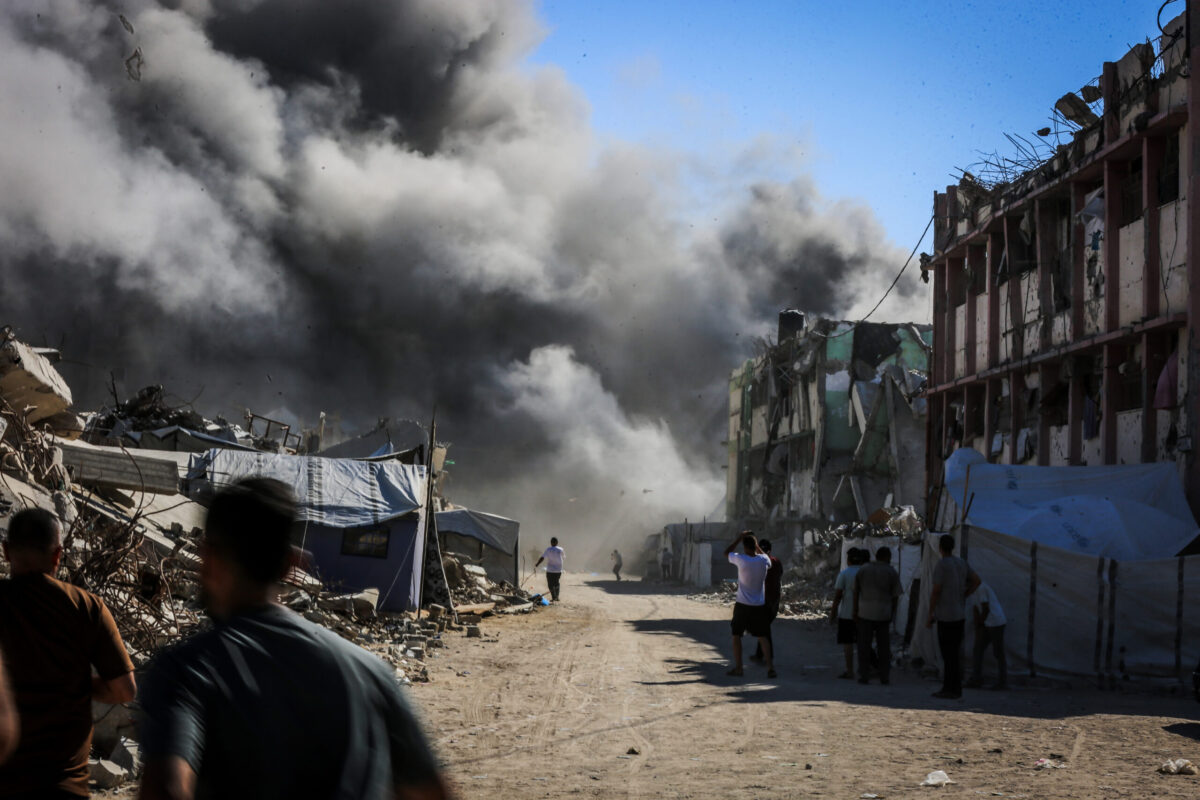
- At least 8 Palestinians, including 2 children, killed in Gaza since dawn — Israeli strikes hit central and southern Gaza, destroying houses, mosques and a water desalination facility, amid continued violations of the October 2025 ceasefire. →
- US removes Syria from State Sponsors of Terrorism list — The State Department formally rescinded the designation Monday, a major step in Washington's normalization with Syria's post-Assad government; Trump later reposted Syrian Foreign Minister Asaad al-Shaibani's thanks. →
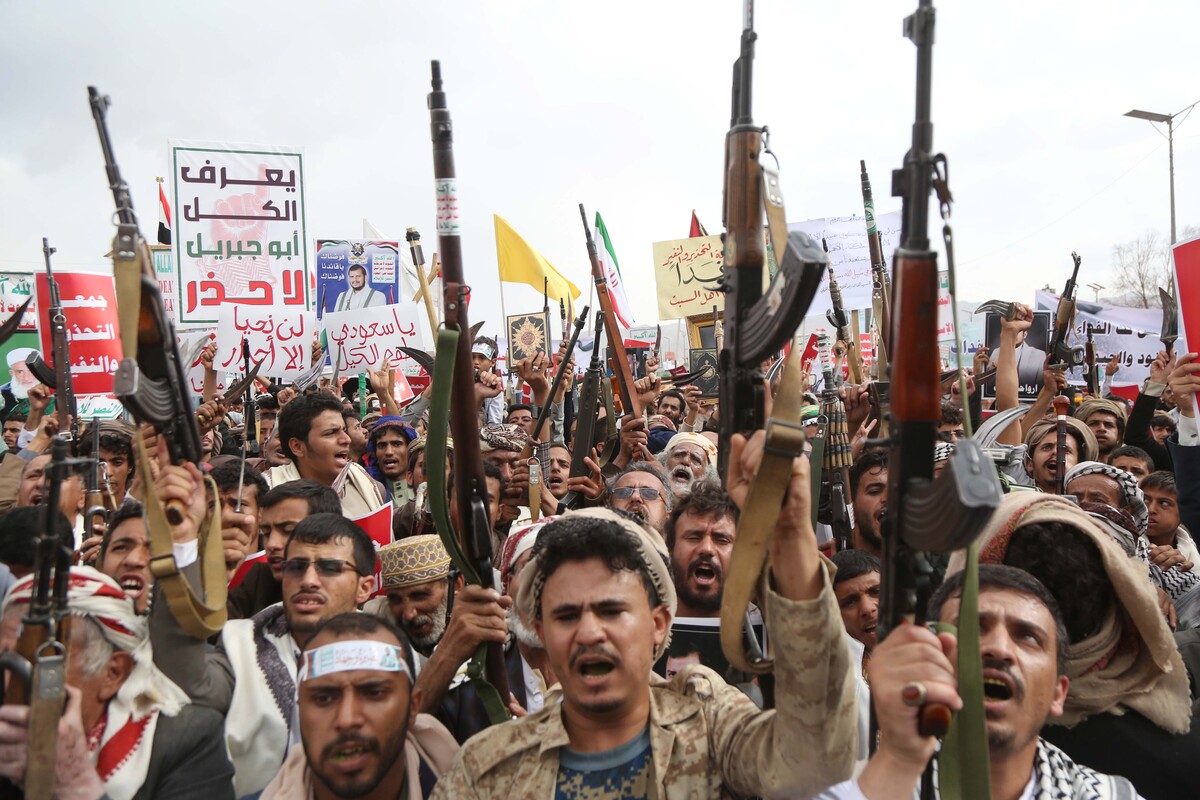
- Houthis claim direct missile hit on Saudi oil tanker Amzan off Yanbu — The group says the strike caused a fire aboard the vessel and that it carried out two additional operations against Saudi troop concentrations in eastern Yemen. →
- Israeli army orders evacuation of residential area north of Al-Shati camp in Gaza City — The area, housing tens of thousands of displaced Palestinians, was ordered emptied hours after Israel threatened assassinations over kites flown by children. →
- Iran blacklists 45 tankers in Strait of Hormuz escalation — Tehran says it will take action against vessels that violate its transit rules and any ships that transfer loads with them, as the US sanctions announcement loomed. →
- UNIFIL: any Israeli military presence north of the Blue Line violates Resolution 1701 — The peacekeeping force pushed back on Israeli talk of new "lines" and "zones" in south Lebanon, affirming the Blue Line is the only recognized boundary. →
Stories at a Glance
- Saudi Aramco has quietly resumed oil exports through the Strait of Hormuz — Maritime tracking shows Saudi-linked tankers crossing the strait using "dark sailing" (transponders switched off), revealing a wide gap between US estimates of oil flows and what is verifiable on the ground. →
- Pakistan's army chief is in Tehran with "new proposals" to revive stalled US-Iran talks — Field Marshal Asim Munir met Iran's parliament speaker and top negotiator Mohammad Bagher Ghalibaf, who accused Washington of breaching the June memorandum of understanding. →
- Israel barred two Swedish MEPs from entering the occupied West Bank — Jonas Sjostedt and Hanna Gedin were stopped in Athens despite holding entry permits; Israel's foreign ministry accused them of spreading "false accusations," including of genocide. →
- 17 Palestinians arrested overnight in West Bank raids as settlers expand an outpost near Nablus — Detainees include the son of Fathi Khazem, the Jenin resistance figure killed by Israeli forces on Friday, while new mobile homes were hauled into an illegal outpost. →
- IRGC warns of strikes on "US energy chokepoints" and European bases, naming Bulgaria — The Revolutionary Guard says it has scenarios for "economic war," while Iran's foreign ministry threatens to target the "origin and source" of any aggression. →
- Iran's rial crashes past 2 million to the dollar — an all-time low — The currency's collapse deepens economic anxiety as Washington tightens the noose; President Pezeshkian warns the US and Israel are exploiting internal divisions. →
- A Palestinian-American flew from Ohio back to Qusra to defend his besieged family home — Armed settlers have surrounded the house for two weeks, pitching tents outside it; Louai Abu Ridi says he could no longer watch the siege unfold on his security cameras from 10,000 km away. →
- Israel is taking over the last UNRWA facilities in Jerusalem, amid a wider assault on refugee camps — Residents of Qalandia and Shufaat camps fear the UN agency's expulsion is part of the same crackdown driving mass displacement in the West Bank. →
Key Takeaways
- The "ceasefire" in Gaza is a political fiction sustained by Western silence. More than 1,200 Palestinians have been killed since the October 2025 ceasefire, according to Al Jazeera English — and Monday's toll of 8, including a 10-year-old girl shot in Khan Younis, shows the pattern is accelerating, not abating. Israel's "kites pretext" — threatening evacuations and assassinations over children's kites that its own military admitted were harmless — reveals a deliberate machinery of escalation.
- The US-Iran confrontation has entered a dual-track economic war with global ripple effects. "Operation Economic Pariah" combines unilateral sanctions on ~60 entities with a public ultimatum to every country that trades with Iran — including threats to cut actors from the dollar system. Iran's response — blacklisting 45 tankers, threatening European bases and US "energy chokepoints" — means the economic war and the military war are now feeding each other, with Europe already counting the costs (Italy's energy bill projected to rise by $13.9 billion).
- Gulf states are hedging visibly, and the Strait of Hormuz is becoming a theater of contradictory signals. Saudi Arabia's return to Hormuz via "dark sailing" at the same moment the Houthis claim a missile hit on a Saudi tanker off Yanbu underscores how fragile alternate export routes have become — and how little reliable information the market actually has.
- West Bank annexation is being operationalized in real time. The transfer of settlement security to Ben-Gvir's police, the expansion of outposts near Nablus, the snatching of UNRWA facilities in Jerusalem, and the settler sieges in Qusra and Ras al-Ain all point to a coordinated push to entrench Israeli control while international attention is fixed on Iran.
- Syria's realignment is accelerating — and being celebrated in Washington. Removing the State Sponsors of Terrorism designation, combined with the transitional government's death sentences against Assad and a life term for former mufti Ahmad Hassoun, signals the US is betting on the new Damascus government while it consolidates. Pollard's bellicose entry into Israeli politics — calling for wars against Egypt and Turkey — hints that Israel's own strategic class is being pulled toward confrontation on multiple fronts.
Gaza & Palestine
Gaza Death Toll Rises to Eight
At least 8 Palestinians, including two children, have been killed by Israeli fire since dawn Monday, with strikes concentrated in central and southern Gaza, RT Arabic reported. A medical source at Nasser Hospital in Khan Younis told Anadolu that the body of 10-year-old Amal Nashat Abu Khater had arrived after Israeli forces targeted local homes and displacement tents with gunfire, according to Middle East Monitor. Witnesses said Israeli military vehicles fired on the al-Satar area of Khan Younis, injuring three Palestinians.
In central Gaza, two Palestinian brothers were killed when an Israeli drone struck a tent sheltering displaced people near the Shuhadaa Al-Aqsa Hospital in Deir al-Balah. Middle East Eye reported that a man also died of wounds sustained in an earlier bombing of the al-Mawasi area, and that Mahmoud Hosni Alou Shar succumbed to injuries from an Israeli drone strike on Gaza City last Tuesday. Meanwhile, Israeli fighter jets targeted a water desalination plant and a mosque in the Sheikh Radwan neighborhood, north of Gaza City — a direct blow to basic civilian infrastructure, with the extent of damage still unclear.
Israeli Army Orders Evacuation North of Al-Shati
The Israeli army on Monday ordered the evacuation of a residential area north of the Al-Shati refugee camp in northwestern Gaza City — an area home to tens of thousands of displaced Palestinians and local residents, witnesses told Anadolu via Middle East Monitor. The order came after Israel threatened assassinations and the evacuation of residential neighborhoods over kites flown by children in the Gaza Strip — despite the Israeli army itself acknowledging that kites recovered near Gaza carried no suspicious material and posed no danger.
17 Arrested as Settlers Expand Outpost Near Nablus
Israeli forces arrested 17 Palestinians on Monday during raids across the occupied West Bank, including the son of Fathi Khazem, the prominent Jenin figure killed by Israeli forces at his home on Friday, according to Middle East Monitor. In Nablus province, six Palestinians were detained from the towns of Zita Jamma'in and Qusin, with forces storming the towns of Zita Jamma'in, Qusin, Tell and Salem, raiding and searching homes. Local sources told Anadolu that occupiers also brought new mobile homes to an illegal outpost near Nablus — physically expanding the settlement footprint as part of what monitors describe as an accelerating annexation drive.
Besieged in Qusra: Palestinian-American Flies Home
Louai Abu Ridi, a Palestinian-American, has returned to his ancestral home in the occupied West Bank village of Qusra after watching from Ohio for months as armed settlers attacked the property day after day. The harassment escalated earlier this month, when settlers surrounded the house and set up tents outside it, seeking to force the residents out, he told Middle East Eye.
"I watched it live when they started to besiege the house and built the tent in front of it... I'm tired. I can't sleep, watching those security cameras live. I'm gonna book my flight. I will come to support you. I will be with you in the same house."
The siege in Qusra connects to a broader structural shift: Mondoweiss reports that Israel's government has responded to settler offensives by handing settlement security to the police of hardline minister Itamar Ben-Gvir — a move that further entangles state forces in the settler project and entrenches de facto annexation.
UNRWA Takeover in Jerusalem Tied to Camp Crackdowns
Israeli forces are moving to take over the remaining UNRWA facilities in Jerusalem, and residents of the Qalandia and Shufaat refugee camps fear the assault on the UN agency is directly linked to the ongoing Israeli military crackdown on the camps, Mondoweiss reports. The connection between the agency's forced expulsion and the military's ground operations suggests the displacement of camp populations is being pursued systematically — through both administrative strangulation and armed pressure.
Israel Bars Two Swedish MEPs from Entry
Two Swedish members of the European Parliament — Jonas Sjostedt and Hanna Gedin of Sweden's Left Party — say they were prevented from traveling to Israel on Sunday despite holding entry permits and supporting documentation, Middle East Monitor reported. The pair were stopped as they prepared to board a flight from Athens to Tel Aviv, en route to the occupied West Bank and East Jerusalem, where they were due to meet Save the Children representatives, visit refugee camps, and speak with Israeli and Palestinian human rights groups. Middle East Eye adds that Israel's foreign ministry accused the lawmakers of "consistently acting against Israel" and spreading "false accusations," including allegations of genocide. Rawhi Fattouh, president of the Palestinian National Council, condemned the decision as "an attempt to impose silence by force and turn criticism of the occupation into an accusation."
Iran & Regional Conflict

Operation Economic Pariah: US Sanctions
In a widely flagged move, the US Treasury on Monday announced "Operation Economic Pariah" (عملية المنبوذ الاقتصادي) against Iran, as Al Jazeera Arabic reported in a breaking alert. Treasury Secretary Scott Bessent described the campaign as "unprecedented," targeting nearly 60 entities, individuals and vessels across technology, gold, aviation and shipping, Middle East Eye reported from his press conference.
"Any entity that facilitates money laundering on behalf of Iran will be removed from the US dollar system. The clock just started ticking." — Scott Bessent
Bessent warned that every country has a "finite timeline" to shut down activities identified by Washington or face Treasury action, and said President Trump was making phone calls to world leaders with specific requests to cease interactions with Iran. He also hinted that "a major financial institution" would be sanctioned by the end of the week over Iran-related dealings. Al Quds Al Arabi reported that the ultimatum was framed as "either stop dealing with Iran or face the consequences." Al Jazeera English framed the announcement as an "economic D-Day" — language Bessent himself used on Sunday — aimed at choking off Iran's revenues and isolating the country.
Trump, for his part, posted on Truth Social: "IRAN IS COMPLETELY COLLAPSING!!! President DJT" — echoing his earlier claims about Tehran's economic and military condition, as Middle East Monitor noted.
Netanyahu Claims Iran Tried to Kill His Son
Prime Minister Benjamin Netanyahu claimed Monday that Iran attempted to kill one of his sons, Al Jazeera Arabic reported. No further details were provided in the initial report. The allegation comes against the backdrop of a documented Iranian psychological-warfare campaign targeting Trump's family — including Iranian state television's Channel 3 airing a video threatening Barron Trump with a $10 million bounty, as covered in previous briefings — and as the Israeli spy-turned-politician Jonathan Pollard calls for taking Iran "off the map," per Middle East Eye. The claim should be treated as an assertion by Netanyahu, pending any independent verification.
Iran Blacklists 45 Tankers in Hormuz Escalation
Hours before the US sanctions announcement, Iran said it had blacklisted 45 tankers for violating its rules to cross the Strait of Hormuz, adding that it would take action against future transits and any vessels transferring loads with them, Middle East Eye reported. The move expands Tehran's newly established Persian Gulf Strait Authority's enforcement regime, which had already warned ships of fines, detention and blacklisting for non-compliance with Iranian transit regulations — a direct challenge to the US-led effort to restore "normal navigation" through the strait.
Saudi Crude Returns to Hormuz via 'Dark Sailing'
Maritime tracking data reveals that Saudi Aramco has resumed oil exports through the Strait of Hormuz, with a number of Saudi-linked tankers transiting the strait using the "dark sailing" pattern — navigation transponders switched off to obscure their movements, Al Jazeera Arabic reported. The same outlet published a companion analysis asking how much oil is actually leaving the Gulf through Hormuz today, noting that estimates diverge sharply and that tanker-tracking data reveals a clear gap between American figures and what can be verified on the ground. The "dark sailing" of Saudi crude through a strait Iran has repeatedly threatened to close underscores both the risk Gulf producers are willing to absorb and the opacity of the market's current information.
Pakistan's Army Chief in Tehran with 'New Proposals'
Pakistan's army chief, Field Marshal Asim Munir, is in Tehran discussing "new" proposals to revive stalled direct US-Iran talks, multiple Pakistani government sources told Anadolu via Middle East Monitor. Munir, accompanied by Interior Minister Mohsin Naqvi, opened the trip with a meeting with Iranian Interior Minister Eskandar Momeni, then met Iran's parliament speaker and chief nuclear negotiator Mohammad Bagher Ghalibaf. According to Mehr News Agency, Middle East Eye reported that Ghalibaf told Munir:
"The US, by breaching its commitments, prevented the establishment of stability in the region and created another reason for distrust."
The visit follows Trump's warning last week of economic consequences for Iran's trade partners — exactly the pressure Bessent operationalized Monday — and marks a renewed push by mediators to bring the two sides back to the table amid the escalating sanctions-and-strikes cycle.
IRGC Warns of Strikes on US Energy Chokepoints and European Bases
Iran's Revolutionary Guard signaled it is preparing for a long economic fight. IRGC spokesman Hossein Mohebi said Tehran "has scenarios to counter the negative effects of this war" and dismissed US pressure, arguing Washington has pursued economic warfare against Iran for decades, Middle East Monitor reported. In sharper terms, Middle East Eye quoted Mohebi warning of "heavy strikes on US energy chokepoints and vital interests" if Iran's infrastructure is attacked, and insisting that "the production of our smart and guided missiles continues."
At the Foreign Ministry, spokesman Esmail Baghaei went further, threatening to target military bases in European countries if they are used in operations against Iran — specifically naming Bulgaria, which he accused of allowing aircraft to use its territory for refueling, Middle East Monitor reported. Baghaei said providing bases or equipment to attackers amounted to "participation in the crime" against Iran.
Iranian Rial Crashes Past Two Million to the Dollar
The Iranian rial hit an all-time low Monday, with the US dollar surpassing 2 million rials (200,000 tomans) on the free market, Al Quds Al Arabi reported. The collapse comes as Iran braces for the new sanctions wave, with the analysis noting the regime is caught between intensifying economic pressure and the option of seeking a settlement with Washington. The currency's slide is expected to hit ordinary Iranians hardest — food, medicine and fuel prices — precisely the demographic pressure point the US "maximum pressure 2.0" campaign appears designed to exploit.
President Masoud Pezeshkian, speaking at a ceremony marking "Government Week" at the Saad Abad complex, blamed foreign interference for the turbulence, saying the US and Israel are "trying to exploit divisions in the country to stir discord," Al Quds Al Arabi reported. He called for national unity in the face of the combined US-Israeli pressure campaign.
Lebanon

UNIFIL Reaffirms Blue Line, Warns on 1701
The United Nations Interim Force in Lebanon (UNIFIL) issued a firm statement Monday declaring that any Israeli military presence north of the Blue Line constitutes a violation of UN Security Council Resolution 1701, Al Quds Al Arabi reported. The peacekeeping force pushed back against Israeli discourse that has recently invoked vague "lines" and "zones" in south Lebanon, affirming that there is only one recognized line — the Blue Line. The statement is a direct rebuke to Israeli claims of temporary or "security" positions inside Lebanese territory, and comes as Israeli ground forces have repeatedly operated north of the line since the 2024 war.
Israeli Strikes Across Southern Lebanon
The Israeli army launched a new wave of attacks Monday, targeting the outskirts of the villages of Ainatha and Haddatha in the Bint Jbeil district, Lebanon's National News Agency reported, Middle East Eye noted. An Israeli drone "exploded while flying over an excavator that was working to remove the rubble of a destroyed building" — striking at the already-limited reconstruction efforts in the south. No casualty figures have been released.
Syria
US Removes Syria from State Sponsors of Terrorism List
The US State Department formally rescinded Syria's designation as a state sponsor of terrorism on Monday, according to a breaking report from Al Quds Al Arabi. The move — a key demand of Syria's post-Assad transitional government — was celebrated by Damascus. Hours later, President Trump reposted an earlier message from Syrian Foreign Minister Asaad al-Shaibani thanking the United States for the decision, RT Arabic reported. The designation's removal lifts a sweeping set of US sanctions tied to the terrorism label and represents Washington's clearest signal yet that it is betting on the new government in Damascus — even as Israel continues strikes on Syrian territory and its officials openly discuss further operations against the Turkish-aligned Syrian government.
The same week saw the accountability process against Assad-era figures continue in Damascus. Former Grand Mufti Ahmed Badreddin Hassoun was sentenced to life imprisonment by a Damascus court on charges including inciting sectarian hatred and abuse of office, with additional sentences of 3 to 20 years in a case that the Middle East Eye reported in detail. He is the tenth figure from the ousted regime to be convicted by the transitional government's courts.
Yemen & Red Sea
Houthis Claim Direct Hit on Saudi Tanker Amzan
Yemen's Houthi movement said Monday it had carried out three operations targeting a Saudi oil tanker in the Red Sea and Saudi troop concentrations in eastern Yemen, Middle East Monitor reported via Anadolu. In a statement, the group said it struck the Saudi oil tanker Amzan with a ballistic missile in the northern Red Sea off the coast of Yanbu, claiming a "direct" hit caused a fire aboard the vessel and that several other ships had left the vicinity. The group's military spokesman, Yahya Saree, confirmed the operation in a televised speech, Middle East Eye added.
The UK Maritime Trade Operations agency (UKMTO) earlier reported that a tanker had been struck by an unknown projectile about 63 nautical miles west of Yanbu, with all crew safe and no reported environmental impact. Saudi authorities did not immediately comment. Yanbu is Saudi Arabia's main Red Sea oil export port and has become a critical alternate route for Saudi crude shipments bypassing the Strait of Hormuz — meaning the Houthi strike lands precisely on the infrastructure meant to replace Hormuz, which the Saudis have simultaneously resumed using (see above).
International Response & Diplomacy
Xi Calls for Diplomatic Solution, Hosts Jordan's King
Chinese President Xi Jinping called for a diplomatic solution to the Middle East crisis during talks with Jordan's King Abdullah II in Beijing on Monday, Middle East Eye reported. "China has always advocated for a comprehensive ceasefire, resolving disputes through political and diplomatic means," Xi said, according to China's foreign ministry. He stressed that "the sovereignty and security of regional countries including Jordan should be respected" and called for a "comprehensive, just and lasting solution to the Palestinian issue," supporting the resumption of Israeli-Palestinian peace talks on the basis of the two-state solution. China and Jordan signed agreements covering diplomacy, trade and supply chains, and in a joint statement called for the restoration of normal navigation through the Strait of Hormuz — a pointed reference to the US-Iran confrontation now constricting the world's most important oil artery.
UN Proposes Confidence-Building Mechanism for Trade Routes
UN Secretary-General Antonio Guterres has proposed a "confidence-building mechanism" for global trade routes, urging verification of ships in the Strait of Hormuz to prevent food supply from becoming "collateral damage" of the conflict, Anadolu Agency reported. The proposal reflects mounting international concern that the US-Iran confrontation — including Iran's threats against shipping and blacklisting of tankers — threatens to weaponize the global food supply chain, not just energy markets.
Europe Counts the Cost of the Iran War
European economies are beginning to price in a prolonged confrontation. Germany's Vice Chancellor and Finance Minister Lars Klingbeil blamed "Trump's Iran war" for rising bond yields, saying the prolonged conflict has pushed up fuel prices and unsettled markets, Anadolu reported. In Italy, a report estimates the war could cost the country around $13.9 billion in additional energy expenditure over six months, compared with pre-war levels, Anadolu noted. The numbers underscore how the US-Iran confrontation is being exported to European households at a time when the continent is already grappling with an energy transition and high inflation.
AIPAC's Brand Turns Toxic in Michigan
In a sign of the shifting politics of Israel in the United States, Republican Senate candidate Mike Rogers's team has asked AIPAC not to run advertisements backing his campaign in Michigan, fearing association with the pro-Israel lobby could cost him votes, Middle East Monitor reported via Axios. Rogers, a staunch Israel supporter, faces Democrat Abdul El-Sayed, an outspoken critic of Israel and US military support for the occupation state. The request is the latest indication that AIPAC's brand has become politically radioactive — even among pro-Israel Republicans — as public support for Israel declines and candidates seek distance from the lobby.
Other Developments

Sudan: 13 Million Displaced as Fighting Intensifies
UN political affairs chief Rosemary DiCarlo told the Security Council that 13 million people have now fled their homes in Sudan, with fighting escalating across multiple fronts since her June briefing, Al Quds Al Arabi reported. Of those, some 8.7 million are internally displaced across all 18 states. The continued collapse of Sudan's civilian infrastructure — and the world's relative inattention — stands in grim parallel to Gaza's trajectory.
Egypt's School Loan Fraud Scandal Prompts Presidential Action
Egyptian President Abdel Fattah al-Sisi issued urgent directives Monday to investigate a scandal involving the international "Global Paradigm" school, which allegedly used ID photos of hundreds of parents to fraudulently secure loans worth 321 million Egyptian pounds without their knowledge, RT Arabic reported. Sisi ordered all similar cases examined and the case referred to investigative authorities. Al Jazeera Arabic's coverage framed the affair as a "social shock" exposing critical flaws in Egypt's consumer credit system.
Libya: NOC Signs Production-Sharing Agreement with Chevron
Libya's National Oil Corporation signed a production-sharing agreement with Chevron, following the earlier granting of exploration licenses to the US company and other foreign firms, RT Arabic reported. Meanwhile, Libya's Export Development Authority head Mohamed al-Hanqari told RT the country is seeking to break its dependence on oil and open export markets in Russia, China and Africa — a diversification push that comes as global energy routes are being reshaped by the Iran confrontation.
Russia-Ukraine War: Missile Technology Sharing, Black Sea Drift Hazards
Britain's Prime Minister Andy Burnham approved Ukraine's request to share Storm Shadow long-range missile technology, enabling Kyiv to develop and produce the missiles domestically — a significant precedent in the West's deepening military support, RT Arabic reported. Russia's Defense Ministry said its forces struck two Ukrainian logistics centers near Odesa, while Russia — and Ukraine — face a growing ecological and security hazard in the Black Sea: floating mines, munitions and drones are drifting as far as Turkish shores, RT Arabic reported in a separate piece, forcing Ankara to invest in sustained detection and disposal efforts.
Trade War Escalates: Trump Doubles Canada Auto Tariffs to 50%
President Trump escalated the US-Canada trade war Monday, announcing tariffs on Canadian cars, trucks and auto parts will rise to 50 percent from January 1, 2027, after negotiations collapsed, Al Jazeera English reported. Ottawa is preparing retaliatory measures. The escalation adds another layer of volatility to the global economy at a moment when the Iran war is already straining energy markets and supply chains.
Record Global Sea Surface Temperature
The world's oceans hit a record daily average sea surface temperature of 21.1°C, according to the EU's Copernicus Climate Change Service, surpassing the previous record set in March 2024, Anadolu reported. A developing El Nino is compounding long-term human-driven warming — with direct implications for food security, extreme weather and the agricultural crises already visible across the Mediterranean basin this summer.
No Updates Yet
- Settler Violence in Hebron — Video footage circulated Monday showing settlers in Hebron (al-Khalil) savagely beating an elderly Palestinian man who is an amputee and, in a separate incident, dragging a donkey to death — scenes th… See previous report →
- Detained Doctor Dima Amin — An Israeli military court on Sunday extended the detention of Dima Amin, a 55-year-old Palestinian gynaecologist, by five additional days over social media posts — despite her suffering a severe heart… See previous report →
- Israeli Incursions into Daraa and Quneitra — Israeli occupation forces advanced into the village of Maariya in the western Daraa countryside with several military vehicles on Monday, according to Syria's state-run al-Ikhbariya channel, as transl… See previous report →
- Haaretz Warns of "Pointless" Türkiye Conflict — Even Israeli establishment media is voicing alarm at Netanyahu's Syria policy. See previous report →
- The Mecca Accord and Israel's Anxieties — This. See previous report →