News Briefing
Breaking News
- Israeli forces killed at least two Palestinians in a pre-dawn drone strike Monday on tents sheltering displaced families near Al-Aqsa Martyrs Hospital in Deir al-Balah, central Gaza, with Wafa reporting one killed and others wounded in the same area; warplanes struck twice near the hospital and artillery shelling hit south of the Maghazi refugee camp. →
- Israeli military vehicles advanced into the village of Maariya in the western Daraa countryside Monday, a day after a Damascus-Tel Aviv de-escalation meeting and following Sunday's Israeli raid in Rafid, Quneitra, where troops detained a shepherd. →
- A Damascus criminal court sentenced Syria's former mufti Ahmad Hassoun to life imprisonment Monday, convicting him of incitement to civil war and sectarian conflict, crimes against humanity and war crimes, and ordering his assets confiscated. →
- The UK Maritime Trade Operations (UKMTO) reported an incident 63 nautical miles west of Yanbu, Saudi Arabia, with a ship struck by an unknown projectile — the latest sign that Red Sea shipping lanes remain contested. →
- Israel is in talks with Uganda and Burundi to deploy troops in Gaza as part of an international security force under a "Peace Council" umbrella, according to military officials speaking to the Associated Press. →
- Pakistan's army chief, Field Marshal Asim Munir, visited Tehran Monday for talks with senior Iranian officials, as Pakistan seeks to break the deadlock in US-Iran negotiations. →
- Video circulated Monday showing settlers brutally beating an elderly Palestinian amputee and dragging a donkey to death in Hebron, sparking widespread outrage over escalating settler terrorism in the occupied West Bank. →
Stories at a Glance
- Israel threatened to escalate assassinations and evacuate areas of Gaza over children's kites — while its own army confirmed four recovered kites carried no suspicious material; Hamas says the threat is a fabricated pretext to target children. →
- Israeli forces arrested 10 Palestinians in the Nablus area Monday while settlers moved mobile housing units into an outpost near the city to expand it. →
- An Israeli military court extended the detention of Palestinian gynaecologist Dima Amin, 55, by five days on Sunday despite her suffering a severe heart attack and undergoing cardiac catheterisation in custody. →
- The number of Israeli settlements and outposts in the West Bank has reached 592, with Israel controlling about 42 percent of the territory, according to a Palestinian government body. →
- Netanyahu vowed Saturday there will be "no Palestinian state" while he is prime minister, even as polls put his bloc short of a Knesset majority. →
- Iran warned ships in the Strait of Hormuz of fines, detention and confiscation, while fewer than 20 vessels transited the strait over the weekend and Tehran threatened neighbors joining the US "economic war." →
- Iraq proposed a joint security council between Iran and Saudi Arabia citing a "crisis of trust," while Oman's foreign minister is set to visit Tehran Tuesday for Hormuz talks. →
- UN Special Rapporteur Francesca Albanese called for an international protection force in Gaza and the West Bank, saying deployment is "absolutely urgent." →
Key Takeaways
- Gaza's ceasefire is being steadily dismantled under the cover of a "kites" pretext. The Israeli leadership's three-day ultimatum over children's kites — which the army itself admits were harmless — paired with continued drone strikes and artillery fire, signals a deliberate escalation toward renewed mass displacement and assassination operations, echoing the patterns that preceded previous ground offensives.
- Israel is internationalizing and outsourcing control of Gaza. The AP report that Israeli officials met Ugandan and Burundian military delegations to discuss deploying African forces under a "Peace Council" umbrella suggests Israel is pursuing a security architecture for Gaza built on African mercenary-style forces, bypassing both Palestinian consent and Arab states — while UN rapporteurs push the competing vision of an international protection force.
- Israeli escalation is now multi-front: Gaza, the West Bank and Syria simultaneously. Incursions into Daraa and Quneitra came the day after a supposed de-escalation meeting, settler violence in Hebron and Nablus is accelerating, and even the Israeli daily Haaretz warns Netanyahu is dragging the country into a "pointless conflict" with Türkiye — all against a backdrop of pre-election maneuvering with his bloc short of a majority.
- Iran has shifted from deterrence to asymmetric economic warfare. With fewer than 20 ships transiting Hormuz over the weekend, state threats to fine, detain or confiscate vessels, a reported cyber takedown of a UK power plant, and state media offering a $10 million bounty on Barron Trump, Tehran is signaling that sanctions pressure will be met with costs imposed on the global economy and Western targets.
- The region is reorganizing without Washington. The Mecca Accord among Saudi Arabia, Türkiye and Pakistan, Iraq's push for a joint Iranian-Saudi security council, and Egypt's possible future alignment are all unfolding as Iran and the US remain locked in a sanctions war — a realignment in which Israel is increasingly isolated and US leverage is visibly declining.
Gaza & Palestine
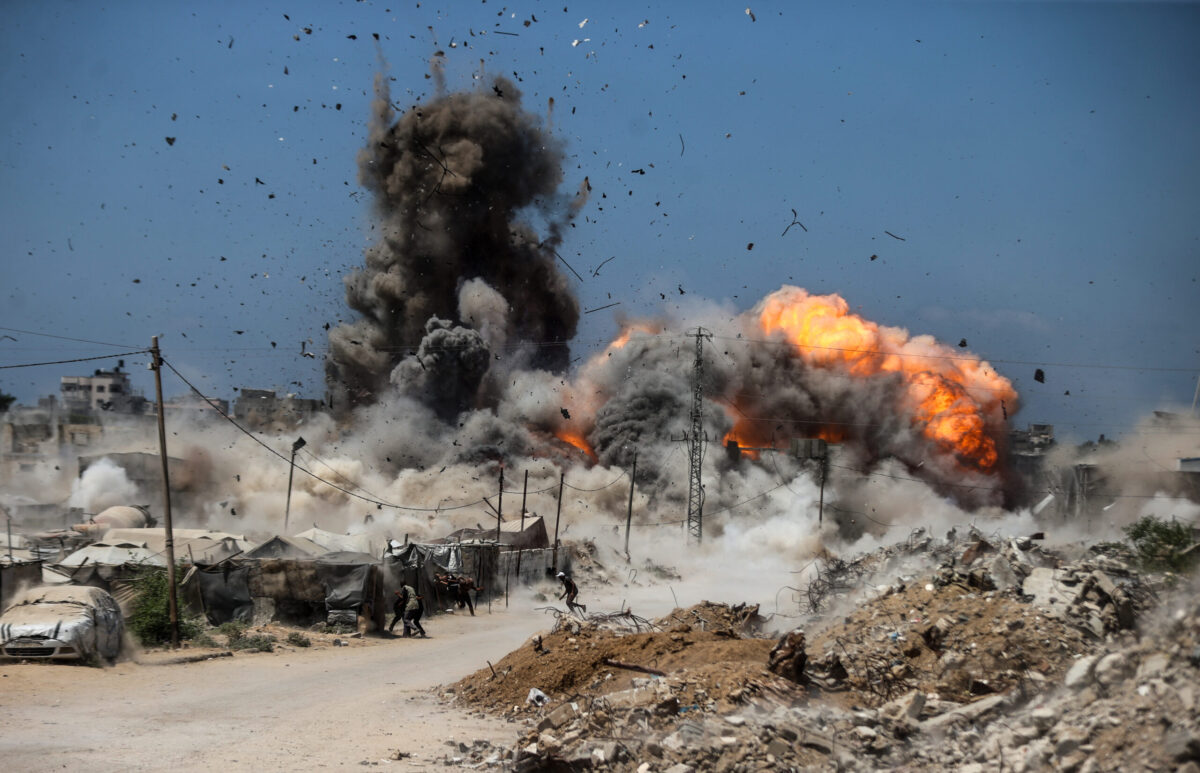
Israeli Drone Strikes Kill Two Near Deir al-Balah
Israeli forces killed at least two Palestinians in a pre-dawn drone strike Monday on tents sheltering displaced families near Al-Aqsa Martyrs Hospital in Deir al-Balah, central Gaza. Medical sources cited by Middle East Eye identified the victims as Mohammed Nasser Abu Assad and Ibrahim Nasser Abu Assad. Reporting in Arabic, Al Quds Al Arabi cited the Palestinian news agency Wafa reporting one Palestinian killed and others wounded when Israeli warplanes struck a tent sheltering displaced people near the hospital; warplanes carried out two additional strikes in the vicinity and artillery shelling hit south of the Maghazi refugee camp.
The attacks are the latest in a near-daily pattern of violations of the ceasefire that has nominally been in force since Oct. 10, 2025. On Sunday alone, two Palestinians including a child were killed and 14 others wounded in strikes in Az-Zawayda and west of Khan Younis, according to Anadolu Agency. Medical sources in Gaza put the overall death toll since October 2023 at more than 73,420 killed, with thousands more still missing and believed to be beneath the rubble.
The Kites Pretext
Israeli Prime Minister Benjamin Netanyahu and Defense Minister Israel Katz threatened on Sunday to step up assassination operations and displace Palestinians from areas of the Gaza Strip unless the launching of "balloons and kites" toward Israel stops, following a special security meeting that reportedly set a three-day deadline. In a striking admission, the Israeli army confirmed that four recovered kites "carried no suspicious material and posed no danger," according to Anadolu.
Hamas spokesman Hazem Qassem rejected the ultimatum, saying it was an attempt to justify continued attacks against children, who fly kites for play and recreation in displacement camps; some kites drift across the border when their strings break. "This is threatening children," Qassem said, according to Middle East Monitor. Palestinian observers view the threat of "broad evacuations" as a rehearsal for renewed mass displacement under the guise of security.
Israel Recruits African Forces for Gaza
Military officials from Uganda and Burundi visited Israel last week to discuss the deployment of their forces in Gaza as part of an international security force under the umbrella of a body referred to as the "Peace Council," according to officials quoted by the Associated Press and reported in Arabic by Al Jazeera. The discussions point to an emerging Israeli-backed security architecture for post-war Gaza that bypasses Palestinian political actors and Arab states alike, and stands in direct contrast to the international protection force demanded by UN Special Rapporteur Francesca Albanese (see below). Neither Uganda nor Burundi has publicly confirmed the talks.
Settler Violence in Hebron
Video footage circulated Monday showing settlers in Hebron (al-Khalil) savagely beating an elderly Palestinian man who is an amputee and, in a separate incident, dragging a donkey to death — scenes that Al Jazeera Arabic reported triggered widespread anger and condemnation. Palestinian commentators described the attacks as emblematic of the "sadism of the perpetrators" and the escalating terror of settler militias operating under Israeli army protection. The incidents come as settler violence across the West Bank has reached unprecedented levels, with attacks on farmers, villages and property occurring on a near-daily basis.
West Bank Arrests and Settlement Expansion
Israeli forces arrested 10 Palestinians on Monday during raids across the occupied West Bank, with six detained from the villages of Zaita, Jamma'in and Qusin in the Nablus governorate, according to Wafa, as reported by Al Quds Al Arabi. Meanwhile, settlers brought new mobile housing units into an outpost near Nablus as part of an active expansion push.
The pattern was consistent over the weekend: on Sunday, the Israeli army arrested 13 Palestinians including a child during raids, while settlers burned a residential room in Osarin south of Nablus, set fire to a vehicle, spray-painted racist slogans, and — in Bethlehem — damaged irrigation pipes, cut down trees and uprooted olive and other trees in the Khala'il al-Louz area, according to Middle East Monitor.
Detained Doctor Dima Amin
An Israeli military court on Sunday extended the detention of Dima Amin, a 55-year-old Palestinian gynaecologist, by five additional days over social media posts — despite her suffering a severe heart attack and undergoing cardiac catheterisation while in custody, according to Middle East Monitor. Israeli forces arrested Amin at her home in Ramallah early last Tuesday. Her family and lawyer were not informed of her whereabouts, and contact with her was cut off for 36 hours. According to her testimony, she was subjected to mistreatment, with her hands tightly restrained; Israeli authorities refused to loosen the restraints despite her medical condition, causing her health to deteriorate and leading to the heart attack.
The case has drawn attention to the broader condition of Palestinian prisoners. Israel currently holds around 9,400 Palestinians in its prisons, including 94 women, more than 350 children, 3,244 administrative detainees and 1,320 people classified as "unlawful combatants," according to figures cited in coverage of Saturday's protest outside Damon Prison in Haifa, where Israeli activists rallied against mistreatment of female detainees and demanded their release (Middle East Monitor).
Settlement Footprint Reaches 592
The number of illegal Israeli settlements and outposts in the occupied West Bank has reached 592, with Israel controlling about 42 percent of the territory, according to a briefing by the Wall and Settlement Resistance Commission, a Palestinian government body (Middle East Monitor). Some 780,000 settlers were living in the West Bank including occupied East Jerusalem as of the end of July — around 333,600 in Jerusalem and 446,400 elsewhere — spread across 192 settlements and 400 outposts, including 231 pastoral outposts.
Netanyahu Vows to Block a Palestinian State
Speaking at his Likud party's general conference in the Arab city of Tayibe on Saturday, Netanyahu responded to Mansour Abbas, leader of the United Arab List, who had argued that Palestine already exists as a state recognized by most of the world and urged Israel and the US to recognize it. Netanyahu replied:
"As long as I am prime minister, there will be no Palestinian state controlled by Iran, neither in Gaza nor in Judea and Samaria."
The remarks, reported by Middle East Monitor, came as new polls put his governing bloc short of a Knesset majority ahead of elections — a domestic pressure point that analysts say is driving the escalation on multiple fronts.
Syria

Life Sentence for Syria's Former Mufti
The Fourth Criminal Court in Damascus sentenced former mufti Ahmad Hassoun to life imprisonment on Monday, convicting him of the felony of "assault that causes civil war and sectarian strife." The court also ordered the confiscation of all his assets. Presiding judge Fakhr al-Din al-Arian said the investigations proved Hassoun's "involvement in crimes against humanity and war crimes," as reported by Al Quds Al Arabi. RT Arabic reported the conviction centered on incitement to violence and justifying murder.
Hassoun served as mufti of the Republic from 2005 until the fall of the Assad regime, and earned the moniker "barrel bomb mufti" in international coverage for issuing religious rulings that legitimized the regime's crackdown, including the use of barrel bombs against civilian areas, as noted by Al Jazeera English. He is the most senior religious figure of the Assad era to face trial in post-Assad Syria.
Israeli Incursions into Daraa and Quneitra
Israeli occupation forces advanced into the village of Maariya in the western Daraa countryside with several military vehicles on Monday, according to Syria's state-run al-Ikhbariya channel, as translated and reported by Al Quds Al Arabi and Middle East Eye. The incursion came a day after a meeting between Damascus and Tel Aviv aimed at de-escalation — underscoring the gap between Israeli diplomatic signaling and its continued military expansion inside Syrian territory. On Sunday, an Israeli force raided the village of Rafid in Quneitra province and detained a shepherd (Middle East Eye).
Haaretz Warns of "Pointless" Türkiye Conflict
Even Israeli establishment media is voicing alarm at Netanyahu's Syria policy. In an editorial published Sunday, the Israeli daily Haaretz — as reported by Middle East Monitor via Anadolu — wrote:
"While we were wondering whether, ahead of the election, Benjamin Netanyahu would choose to wage war in Gaza or Lebanon, or perhaps ignite the West Bank, he decided to make a move in northern Syria, expanding a front with Türkiye."
The editorial referenced Israel's attack on a military airfield in northern Syria last Tuesday, which Netanyahu publicly framed as targeting the expanding Turkish presence in the country. The warning highlights how Israel's aggressive posture in Syria is increasingly bringing it into direct confrontation with Türkiye, a NATO member with significant military assets in northern Syria.
Iran & Regional Conflict
Iran Faces a New Sanctions Wave
Iran is bracing for a new round of US sanctions expected to be unveiled Monday, targeting Tehran and all those dealing with it, with warnings of severe pressure on trade, medicine, food and energy — and diminishing capacity to evade the measures, according to Al Jazeera Arabic. Iranian Foreign Minister Abbas Araghchi mocked the impending measures, saying it is like watching the "same movie on repeat" (Al Jazeera English).
President Masoud Pezeshkian said Sunday that Iran is in "a full-scale economic, military and security war," adding that the government is "ashamed" of the state of the economy (Middle East Monitor). "The enemy had assessed that if Iran falls, it will become Venezuela. Not only did it not [succeed]..." — a reference to Trump's stated goal of crushing Iran economically. Meanwhile, the head of Iran's Basij paramilitary force, Hossein Taeb, claimed the US, not Iran, was "forced" to seek negotiations: "We reached a document through negotiations, but the other side could not tolerate this document for 60 days and violated it," Iranian media quoted him as saying (Middle East Eye).
Strait of Hormuz: Threats and Collapsing Transits
Iran's newly established Persian Gulf Strait Authority warned Sunday that ships failing to comply with its transit regulations could face penalties during subsequent passages, including fines, detention or confiscation (Al Quds Al Arabi, Middle East Monitor). The authority urged cargo owners to consult an updated list of non-compliant vessels before chartering ships, warning that vessels cooperating with listed ships in ship-to-ship transfers or transshipment would themselves be added to the list.
The threats are already having a measurable effect. Fewer than 20 vessels transited the Strait of Hormuz over the weekend — four ships on Sunday and 13 on Saturday — with some vessels switching off their transponders, according to data from Kpler (Middle East Eye). At least 145 countries have reported increases in petrol prices since the US-Israeli attacks on Iran began, according to Al Jazeera English. Meanwhile, Mohsen Rezaee, secretary of Iran's Supreme National Security Council, threatened neighboring countries on Saturday against joining the US "economic war":
"We tell all neighbouring countries not to participate in the economic war with the US; otherwise, we will consider them an enemy... If the countries surrounding Iran join the Americans in the economic war, we will strike their interests."
Rezaee warned that if neighbors cooperated with Washington, "not a single drop of oil will leave the Persian Gulf or the Strait of Hormuz" (Middle East Monitor).
Ship Attack Reported Off Saudi Coast
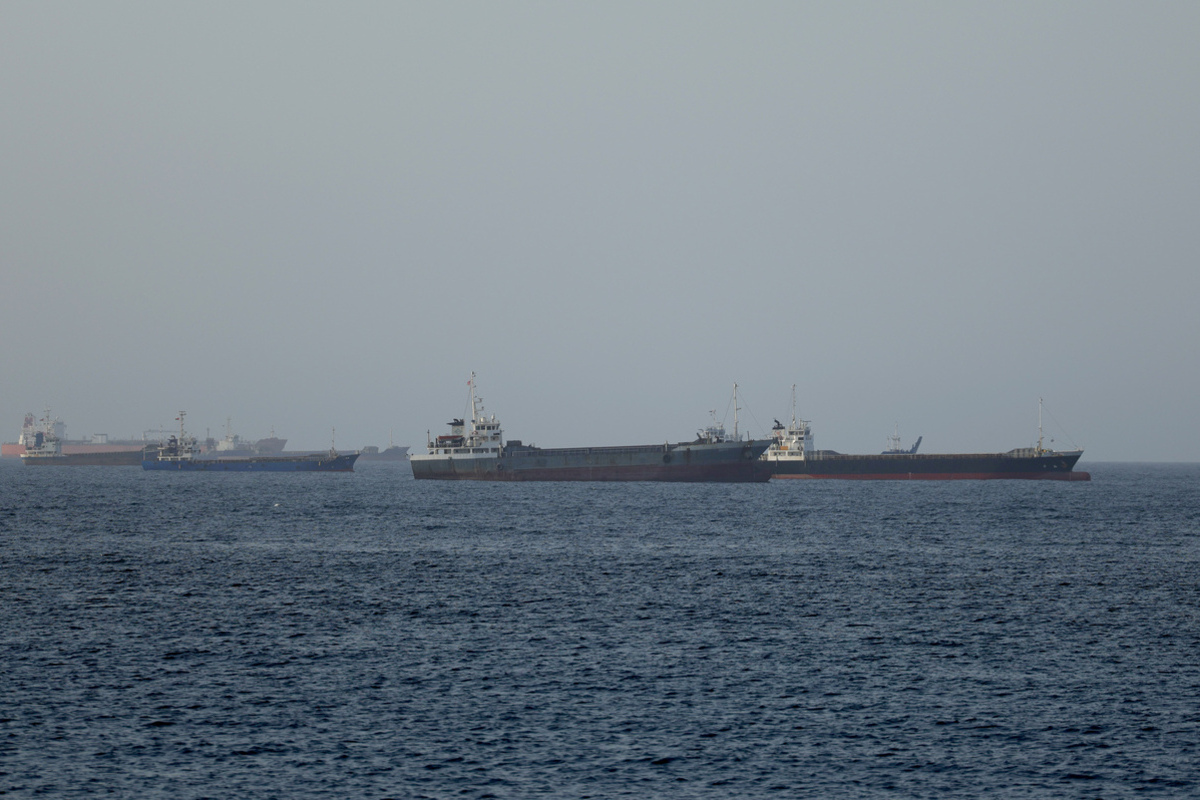
The UK Maritime Trade Operations (UKMTO) reported an incident on Monday 63 nautical miles west of the Saudi city of Yanbu, with RT Arabic reporting that a ship was struck by an unknown projectile off the Saudi coast. The UKMTO's initial alert (Al Jazeera Arabic) provided no further details, and no party has claimed responsibility. The incident underscores that the Red Sea remains an active conflict zone, with Houthi forces continuing to strike ships and Yemeni government forces claiming their own drone attacks on Houthi positions over the weekend (Middle East Eye).
Pakistan's Army Chief in Tehran
Pakistan's army chief, Field Marshal Asim Munir, visited Tehran on Monday for high-level talks with senior Iranian officials, Iran's Foreign Ministry spokesman Esmaeil Baqaei announced Sunday (Middle East Monitor). The visit aims to bolster bilateral cooperation and build on "Pakistan's efforts to help strengthen peace and security in the region," Baqaei said. Pakistan has acted as a key mediator between Iran and the US throughout the war, which included a June 17 memorandum of understanding and subsequent negotiations toward a final agreement that have since stalled. Al Jazeera English notes that analysts differ sharply over how much influence Islamabad can actually wield in bridging the Tehran-Washington gap.
Iraq Proposes Tehran-Riyadh Security Council
Iraq has proposed the creation of a joint security council between Iran and Saudi Arabia, citing a "crisis of trust" between the two countries, according to Qasim al-Araji, national security adviser to the Iraqi prime minister, speaking to state broadcaster Iraqiya TV. Al-Araji indicated that Baghdad has presented the proposal to both Tehran and Riyadh (Middle East Eye). Separately, Oman's Foreign Minister Sayyid Badr Albusaidi is expected in Tehran on Tuesday for talks focusing on the Strait of Hormuz, with Baqaei describing the visit as part of "sustained political consultations between the two sides as littoral states of the Strait of Hormuz" (Middle East Eye).
Iranian Cyber Attack on UK Power Plant
Iranian hackers shut down a British power plant for four days in what the Sunday Telegraph described as the first time Iran-linked hackers have successfully shut down such a UK facility (Middle East Eye). The incident coincided with a series of attacks on US water infrastructure last month that affected at least 12 states and alarmed the White House. British officials have refused to identify the facility, with a Department for Energy Security and Net Zero spokesperson saying the attack impacted a "small-scale energy generator" posing no "risk to the wider energy system." The attack signals a new front in the Iran-US-UK confrontation: direct cyber retaliation against Western critical infrastructure.
Iran Escalates Threats Against Trump Family
Iranian state television's Channel 3 aired a video threatening Barron Trump, the son of US President Donald Trump, offering a $10 million reward for his killing and detailing surveillance of him at multiple locations, according to RT Arabic. The broadcast escalates an already fraught confrontation between Tehran and the Trump family, following previous Iranian threats tied to the assassination of Qassem Soleimani and, more recently, the US-Israeli war on Iran.
Regional Diplomacy & Alliances
The Mecca Accord and Israel's Anxieties
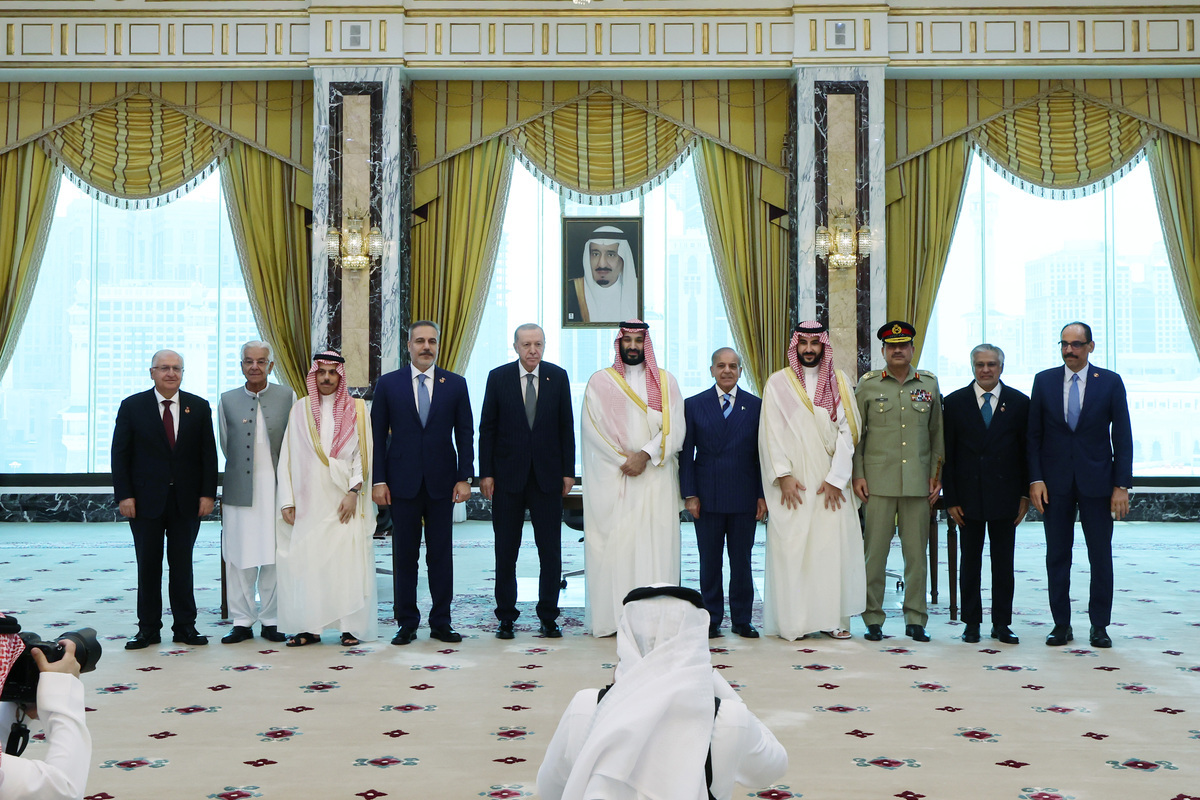
This